Hearing your child snore occasionally may not seem unusual. Perhaps they have a blocked nose, a common cold, or seasonal allergies. But what if your child snores almost every night, breathes through their mouth while sleeping, or frequently wakes up feeling tired?
Persistent snoring in children should not always be dismissed as a normal sleeping habit. In some cases, it may indicate enlarged tonsils, enlarged adenoids, nasal obstruction, or a sleep-related breathing condition called Obstructive Sleep Apnea (OSA).
Identifying the underlying cause early can help improve your child’s breathing, sleep quality, and overall well-being.
Is Snoring Normal in Children?
Occasional snoring can happen when children have a cold, nasal congestion, or temporary allergies. However, loud and frequent snoring may indicate an obstruction in the upper airway.
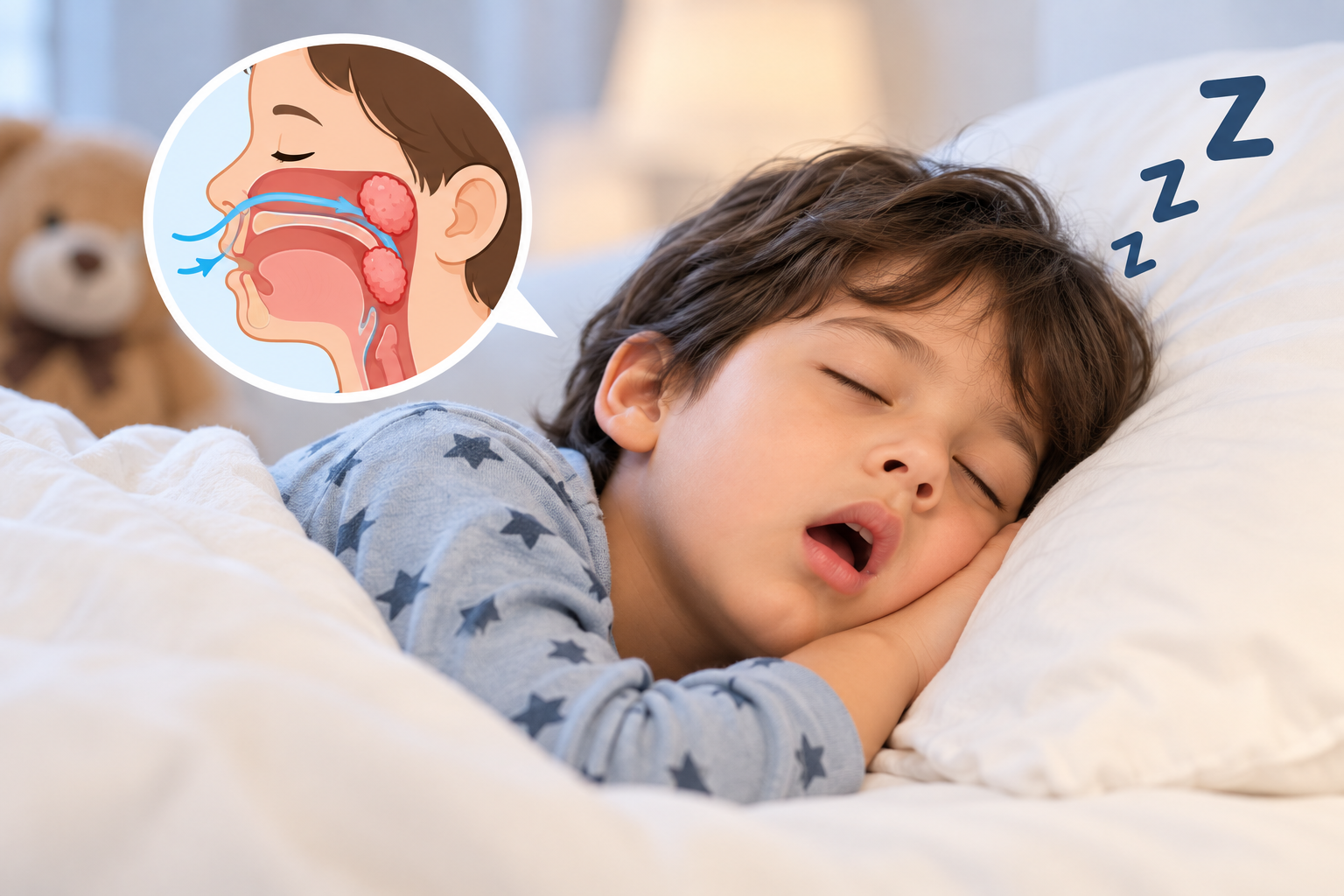
When a child sleeps, the muscles around the throat relax. If the airway is already narrowed because of enlarged tonsils, adenoids, or nasal congestion, airflow can become turbulent, producing the sound of snoring.
According to pediatric sleep guidance, regular snoring accompanied by other symptoms should be evaluated for possible obstructive sleep apnea.
Common Causes of Snoring in Children
Several conditions can interfere with normal breathing during sleep.
1. Enlarged Adenoids
Adenoids are small tissues located behind the nose, where the nasal passages meet the throat.
In children, these tissues can become enlarged and obstruct airflow through the nose.
Common symptoms include:
- Persistent mouth breathing
- Snoring during sleep
- Blocked nose without an obvious cold
- Nasal-sounding speech
- Restless sleep
- Frequent ear infections in some children
Enlarged adenoids are among the important causes of childhood nasal obstruction and sleep-related breathing difficulties.
2. Enlarged Tonsils
Tonsils are located at the back of the throat. When they become unusually large, they can narrow the airway and make breathing difficult during sleep.
Children with enlarged tonsils may experience:
- Loud snoring
- Difficulty breathing during sleep
- Frequent throat infections
- Restless sleeping
- Pauses in breathing
- Difficulty swallowing in some cases
An ENT specialist can examine the tonsils and determine whether their size is contributing to the symptoms.
3. Childhood Obstructive Sleep Apnea
Obstructive Sleep Apnea (OSA) occurs when the upper airway repeatedly becomes partially or completely blocked during sleep.
This can interrupt normal breathing and reduce sleep quality.
Common warning signs include:
- Loud snoring on most nights
- Pauses in breathing
- Gasping or choking during sleep
- Restless sleeping
- Frequent nighttime awakenings
- Sweating during sleep
- Unusual sleeping positions
Children with untreated sleep-disordered breathing may also experience daytime tiredness, irritability, difficulty concentrating, and behavioural changes.
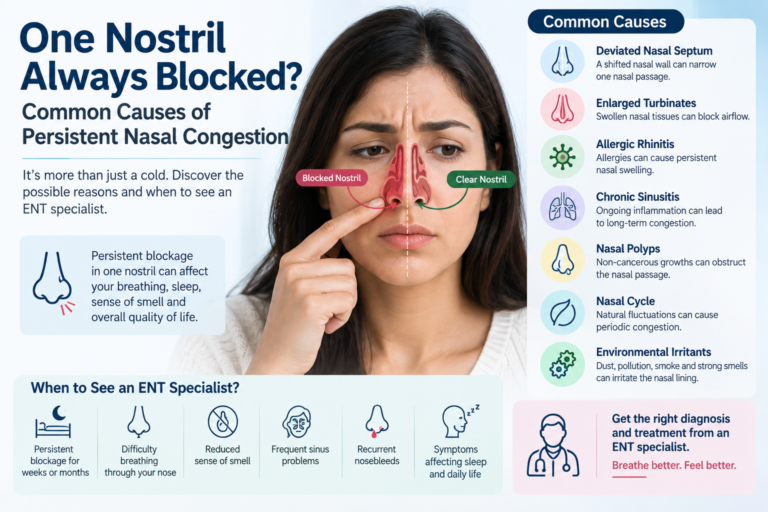
4. Allergic Rhinitis
Allergies can cause swelling inside the nose, making it difficult for children to breathe normally.
Common triggers include dust mites, pollen, pet dander, and mold.
Symptoms may include:
- Frequent sneezing
- Runny or blocked nose
- Itchy nose
- Watery eyes
- Mouth breathing
- Snoring, especially during allergy flare-ups
Managing the underlying allergy can help improve nasal airflow.
5. Deviated Nasal Septum
The nasal septum separates the two nasal passages. If it is significantly deviated, one side may become narrower, making nasal breathing difficult.
Some children develop septal deviation naturally, while others may experience it following an injury.
A deviated septum may contribute to persistent nasal obstruction and mouth breathing.
Warning Signs Parents Should Never Ignore
Not all snoring indicates sleep apnea. However, certain symptoms suggest that your child needs an ENT evaluation.
Watch for these signs:
During sleep:
- Loud snoring almost every night
- Repeated pauses in breathing
- Gasping or choking sounds
- Restless sleep or frequent movements
- Sleeping with the mouth open
- Unusual head or neck positioning to breathe comfortably
During the day:
- Difficulty waking up
- Morning headaches
- Excessive tiredness
- Irritability or behavioural changes
- Difficulty concentrating at school
- Persistent mouth breathing
If you notice repeated breathing pauses or gasping during sleep, arrange a medical assessment rather than waiting for the symptoms to disappear.
How Does Poor Sleep Affect a Child’s Health?
Sleep plays an important role in childhood development. Repeated interruptions in breathing can prevent children from getting adequate restorative sleep.
Poor sleep associated with obstructive sleep apnea may contribute to:
- Daytime fatigue
- Difficulty concentrating
- Behavioural difficulties
- Learning and school-performance problems
- Growth concerns in some children
- Reduced overall quality of life
Early diagnosis and appropriate treatment can help address these problems.
How Is Childhood Snoring Diagnosed?
An ENT specialist evaluates the child’s symptoms, examines the upper airway, and determines whether additional testing is necessary.
The assessment may include:
1. Physical Examination
The doctor examines the tonsils, nose, throat, and other structures that may contribute to airway obstruction.
2. Nasal Endoscopy
A flexible or rigid endoscope may be used to examine the nasal passages and assess the size of the adenoids.
3. Sleep Study (Polysomnography)
A sleep study records breathing patterns, oxygen levels, heart rate, and other measurements during sleep.
It is the standard test for diagnosing obstructive sleep apnea and assessing its severity in children.
The American Academy of Pediatrics recommends sleep testing or specialist referral for children who regularly snore and have symptoms or signs suggesting obstructive sleep apnea.
Treatment Options for Children Who Snore
Treatment depends on the underlying cause, the severity of symptoms, and the child’s overall health.
Medical Management
If allergies or nasal inflammation are contributing to snoring, the ENT specialist may recommend:
- Saline nasal sprays or rinses
- Appropriate allergy medications
- Intranasal corticosteroid sprays
- Environmental allergen control
Medication should be selected according to the child’s age and medical condition.
Adenoidectomy
If enlarged adenoids are significantly obstructing the airway, adenoid removal may be considered.
The procedure is known as an adenoidectomy and is performed under general anaesthesia.
Tonsillectomy or Adenotonsillectomy
When enlarged tonsils and adenoids contribute to obstructive sleep apnea, surgical removal may be recommended.
An adenotonsillectomy involves removing both the tonsils and adenoids.
Surgery is not necessary for every child who snores. The decision depends on examination findings, symptoms, sleep-study results when indicated, and individual risk factors.
CPAP Therapy
Some children may require Continuous Positive Airway Pressure (CPAP), particularly when surgery is unsuitable or obstructive sleep apnea continues after surgery.
This treatment uses a device that delivers air pressure through a mask to help keep the airway open during sleep.
When Should Parents Consult an ENT Specialist?
Consider scheduling an ENT consultation if your child:
- Snores regularly, especially three or more nights a week
- Breathes through the mouth while sleeping
- Has persistent nasal obstruction
- Experiences repeated breathing pauses during sleep
- Frequently wakes up during the night
- Has enlarged tonsils or suspected enlarged adenoids
- Experiences daytime tiredness or behavioural changes
- Has recurrent ear infections alongside nasal obstruction
Important: If your child has severe difficulty breathing, blue or grey lips, or prolonged breathing pauses with colour changes, seek emergency medical assistance immediately.
Can Parents Reduce Snoring at Home?
Some simple measures may help when temporary congestion or environmental irritation contributes to snoring.
- Keep your child’s sleeping area clean and dust-free.
- Wash bedding regularly.
- Reduce exposure to smoke and strong fragrances.
- Manage known allergies with medical guidance.
- Encourage a healthy sleep routine.
- Maintain a healthy weight where appropriate.
- Keep track of nighttime symptoms.
If possible, record a short video of your child’s snoring or unusual breathing during sleep. This can help the doctor understand what you are observing, although it cannot replace a proper medical assessment or sleep study.
Final Thoughts
A child who snores occasionally because of a cold may not have an underlying health problem. However, snoring every night, especially when accompanied by mouth breathing, gasping, or pauses in breathing, deserves medical attention.
Enlarged tonsils, enlarged adenoids, allergies, and obstructive sleep apnea are some of the conditions that can interfere with normal childhood breathing during sleep.
If your child snores regularly or shows signs of disturbed sleep, consult an ENT specialist for an appropriate evaluation. Early diagnosis can help identify the cause and guide treatment so your child can breathe and sleep more comfortably.