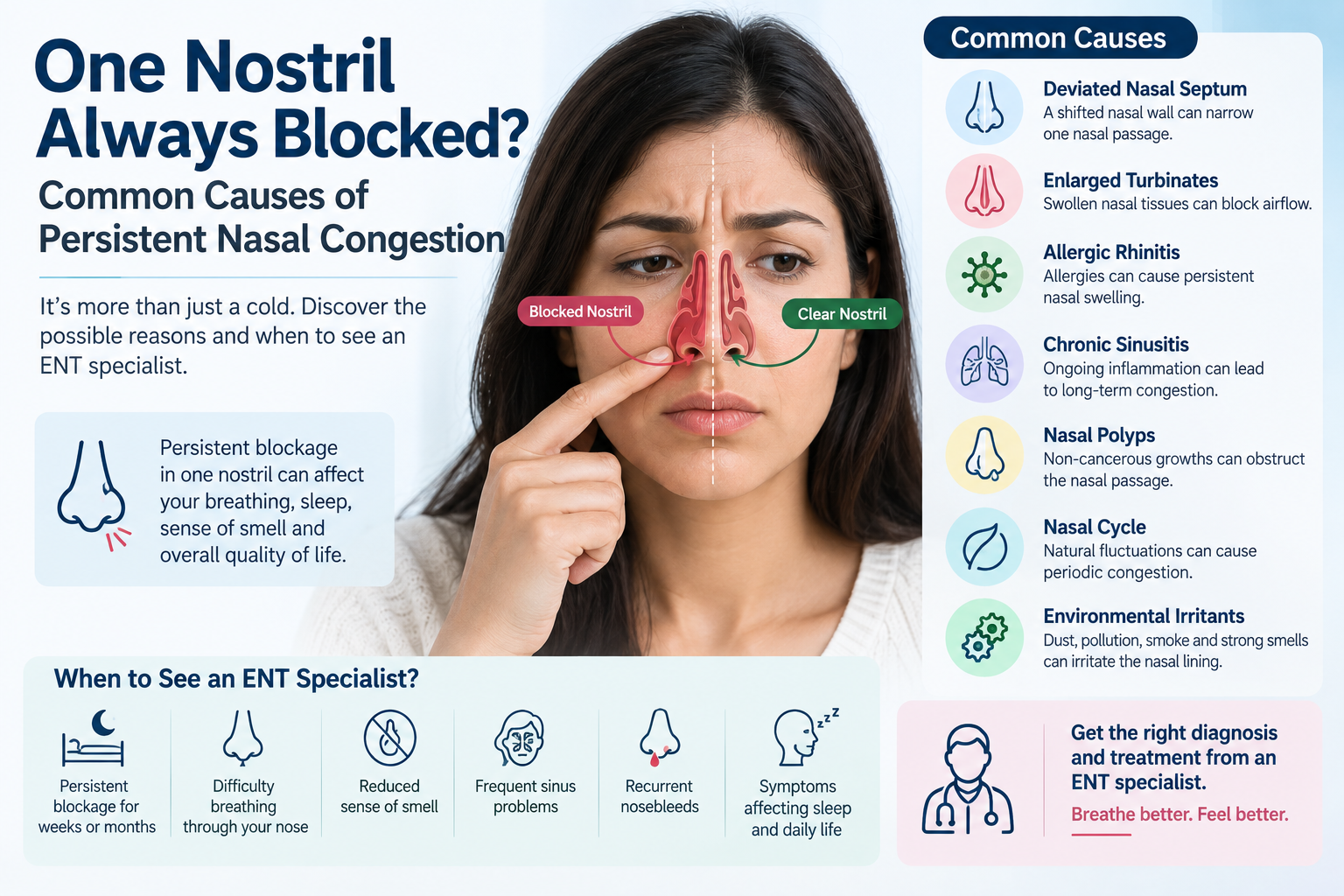
Have you noticed that one nostril always seems blocked, even when you don’t have a cold? Persistent nasal congestion on one side can be frustrating, especially when it affects your sleep, breathing, exercise, or sense of smell.
Occasional nasal blockage is normal. In fact, the nose naturally alternates which side is more congested throughout the day—a process called the nasal cycle. However, if the same nostril remains blocked for weeks or months, there may be an underlying nasal or sinus problem that needs evaluation.
Why Is Only One Nostril Blocked?
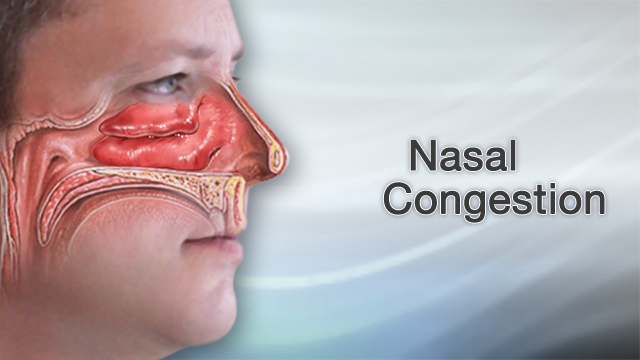
Several conditions can cause persistent one-sided nasal congestion. The most common include structural problems, allergies, chronic inflammation, and nasal growths.
1. Deviated Nasal Septum
The nasal septum is the wall separating the two sides of your nose. If it is significantly deviated to one side, it can narrow the nasal passage and make breathing difficult.
A deviated septum may result from:
- Natural development
- Previous nasal injury
- Childhood trauma
- Previous nasal surgery
You may notice that breathing is consistently worse through one side, particularly when lying down.
2. Enlarged Nasal Turbinates
Turbinates are structures inside the nose that help warm, humidify, and filter the air you breathe.
When they become enlarged because of allergies, irritation, or chronic inflammation, they can narrow the nasal airway. Turbinate swelling may fluctuate, but it can sometimes remain persistent.
3. Allergic Rhinitis
Allergies can cause swelling of the nasal lining, resulting in congestion, sneezing, itching, and watery discharge.
Common triggers include:
- Dust mites
- Pollen
- Pet dander
- Mold
- Air pollution
Although allergies often affect both sides of the nose, congestion can feel worse on one side at certain times.
4. Chronic Sinusitis
Chronic sinus inflammation can cause ongoing nasal blockage along with:
- Facial pressure
- Thick nasal mucus
- Postnasal drip
- Reduced sense of smell
- Headache
- Persistent congestion
If symptoms continue for months despite routine treatment, an ENT evaluation can help determine whether chronic sinus disease is involved.
5. Nasal Polyps
Nasal polyps are soft, non-cancerous growths that develop from inflamed nasal or sinus tissue.
They can cause:
- Persistent nasal obstruction
- Reduced or lost sense of smell
- Mouth breathing
- Postnasal drip
- Snoring
Larger or isolated polyps may make one side feel more blocked than the other.
6. Nasal Cycle
Not every change in nasal airflow indicates disease.
The nasal cycle is a natural process in which blood flow to the tissues inside each nasal passage changes periodically. One side may become slightly more congested while the other opens up, and then they switch.
If the blockage alternates sides and clears periodically, this may simply be part of normal nasal physiology.
However, persistent blockage of the same nostril deserves closer attention.
7. Environmental Irritants
Smoke, dust, strong perfumes, chemical fumes, and polluted air can irritate the nasal lining and contribute to swelling.
Repeated exposure may cause chronic nasal inflammation even when you don’t have an infection.
8. Foreign Body or Local Nasal Problem
A foreign object in the nose is more common in children but can occasionally occur in adults.
One-sided obstruction accompanied by foul-smelling or bloody discharge should be assessed by an ENT specialist rather than treated repeatedly with home remedies.
9. Less Common Causes
Persistent unilateral nasal obstruction can occasionally be associated with other conditions, including benign or malignant nasal masses.
This does not mean that every blocked nostril is a sign of something serious. However, persistent one-sided symptoms—particularly when accompanied by bleeding, facial swelling, worsening pain, or a visible mass—should be medically evaluated.
One Nostril Blocked at Night? Here’s Why
Nasal congestion can become more noticeable when you’re lying down.
Several factors may contribute:
- Increased blood flow to nasal tissues
- Gravity-related changes in nasal drainage
- The natural nasal cycle
- Allergies or bedroom dust
- A deviated septum
- Enlarged turbinates
If one side is consistently difficult to breathe through at night, an underlying structural problem may be contributing.
How Can You Tell If It’s a Deviated Septum?
A deviated septum may be more likely if you have:
- Long-term blockage predominantly on one side
- Difficulty breathing through the nose during exercise
- Frequent nasal congestion
- Recurrent sinus problems
- Snoring or mouth breathing
- A history of nasal injury
An ENT specialist can examine the inside of your nose and determine whether septal deviation is contributing to the obstruction.
How Is Persistent Nasal Congestion Diagnosed?
An ENT evaluation typically begins with your symptoms and medical history.
Your doctor may examine:
- Nasal passages
- Nasal septum
- Turbinates
- Sinus openings
- Throat and surrounding structures
Depending on the symptoms, additional tests may include nasal endoscopy, allergy testing, or a CT scan of the sinuses.
The goal is to identify the actual cause rather than repeatedly treating congestion without addressing its source.
Treatment Depends on the Cause
Treatment for a persistently blocked nostril varies according to the underlying problem.
For Allergies
Your doctor may recommend:
- Saline nasal rinses
- Intranasal corticosteroid sprays
- Antihistamines
- Allergen avoidance
- Allergy treatment when appropriate
For Structural Problems
A significantly deviated septum or enlarged turbinates may require procedural or surgical treatment when symptoms remain troublesome despite appropriate medical management.
For Chronic Sinus Disease or Polyps
Treatment may involve nasal corticosteroids, saline irrigation, management of allergies or inflammation, and—when appropriate—endoscopic sinus surgery.
Avoid prolonged use of topical nasal decongestant sprays without medical advice, as overuse can cause rebound congestion.
When Should You See an ENT Specialist?
Make an appointment if:
- One nostril remains blocked for several weeks
- Nasal congestion repeatedly affects your sleep
- You have difficulty breathing through your nose
- Your sense of smell has decreased
- You frequently experience sinus pressure or infections
- You regularly breathe through your mouth
- Symptoms don’t improve with appropriate treatment
Seek prompt medical evaluation if one-sided blockage is accompanied by recurrent nosebleeds, bloody or foul-smelling discharge, facial swelling, severe pain, or a visible nasal mass.
Final Thoughts
Having one blocked nostril occasionally can be completely normal because of the natural nasal cycle. But if the same nostril is persistently blocked, it may indicate a deviated septum, enlarged turbinates, allergies, chronic sinus inflammation, nasal polyps, or another underlying problem.
Instead of relying on repeated decongestants or assuming the problem is simply a cold, consider an ENT evaluation if the congestion persists. Identifying the underlying cause is the first step toward improving nasal breathing and getting better sleep.