Head pressure and facial pain are often assumed to be signs of a sinus infection. However, many people who believe they have sinusitis are actually experiencing migraines. Because these two conditions share several symptoms, it can be difficult to tell them apart without proper evaluation.
Understanding the differences between sinusitis and migraine can help you seek the right treatment, avoid unnecessary antibiotics, and find lasting relief.
Why They Are Often Confused
Both sinusitis and migraines can cause:
- Pain around the forehead and eyes
- Facial pressure
- Headache
- Nasal congestion
- Watery eyes
- Difficulty concentrating
Research has shown that many self-diagnosed “sinus headaches” are actually migraines. Knowing the distinguishing features is essential for accurate diagnosis.
What Is Sinusitis?
Sinusitis is inflammation of the sinus cavities, usually caused by a viral infection, allergies, or, less commonly, a bacterial infection. Swollen sinus tissues block normal mucus drainage, creating pressure and discomfort.
Common Symptoms of Sinusitis
- Pressure in the cheeks, forehead, or around the eyes
- Thick yellow or green nasal discharge
- Stuffy nose
- Reduced sense of smell
- Facial pain that worsens when bending forward
- Fever (sometimes)
- Tooth pain, especially in the upper jaw
- Symptoms lasting more than 10 days or worsening after initial improvement
What Is a Migraine?
A migraine is a neurological condition that causes moderate to severe headaches, often accompanied by other symptoms beyond head pain.
Migraine attacks may last from 4 to 72 hours and can significantly interfere with daily activities.
Common Symptoms of Migraine
- Throbbing or pulsating headache
- Pain usually on one side of the head (but can occur on both)
- Nausea or vomiting
- Sensitivity to light, sound, or smells
- Facial pressure without infection
- Nasal congestion or watery eyes
- Visual disturbances (aura) in some people
- Pain worsened by physical activity
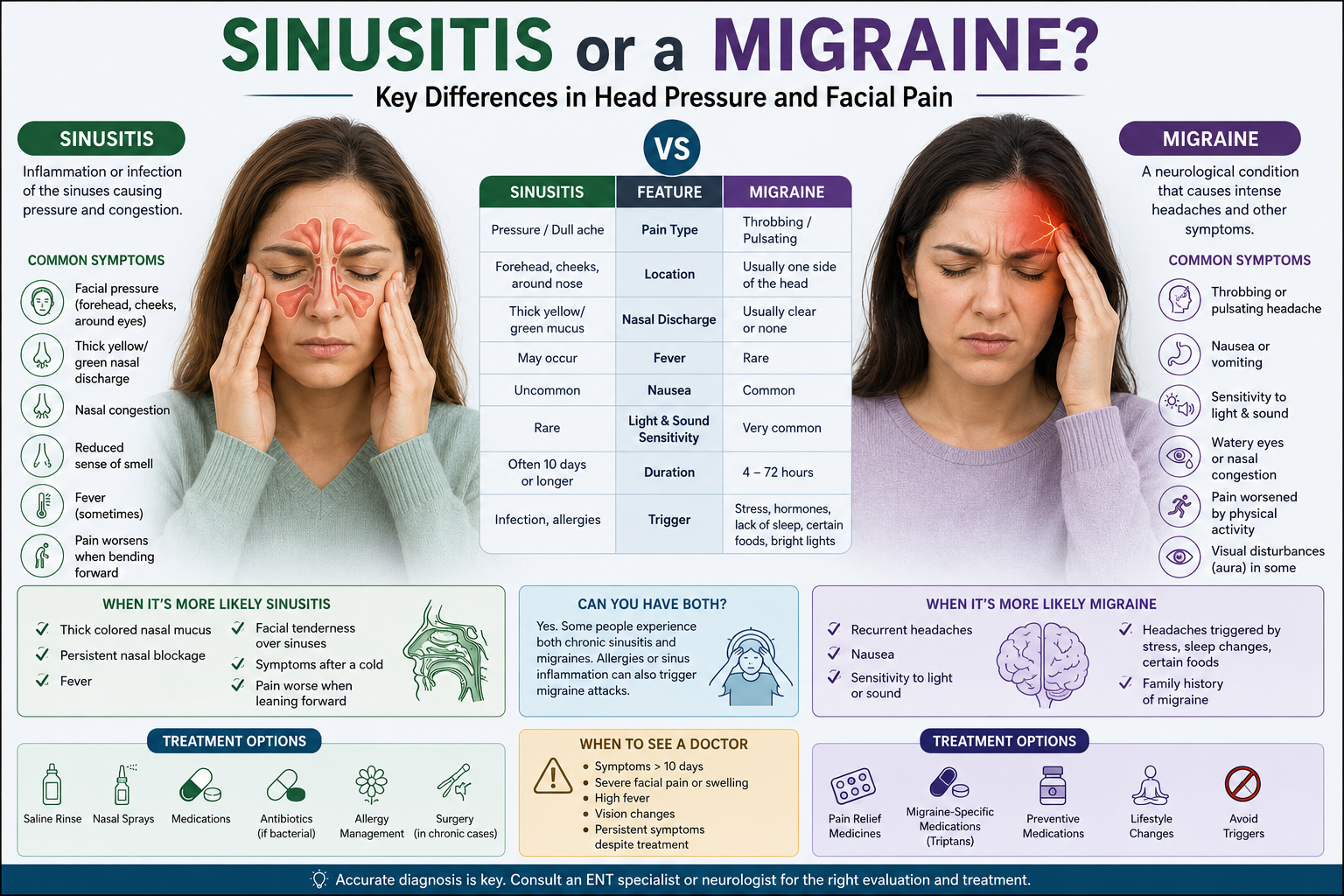
Key Differences Between Sinusitis and Migraine
| Feature | Sinusitis | Migraine |
|---|---|---|
| Pain | Pressure or dull ache | Throbbing or pulsating |
| Location | Forehead, cheeks, around nose | Usually one side of the head, but may spread |
| Nasal Discharge | Thick yellow or green mucus | Usually clear or absent |
| Fever | May occur | Rare |
| Nausea | Uncommon | Common |
| Light & Sound Sensitivity | Rare | Very common |
| Duration | Often 10 days or longer | 4–72 hours |
| Trigger | Infection or allergies | Stress, hormones, lack of sleep, certain foods |
When Facial Pain Points to Sinusitis
You’re more likely to have sinusitis if you experience:
- Thick colored nasal mucus
- Persistent nasal blockage
- Fever
- Facial tenderness over the sinuses
- Symptoms following a cold
- Pain that increases when leaning forward
These signs suggest inflammation or infection within the sinus cavities.
When Facial Pain Is More Likely a Migraine
Migraine becomes more likely if you have:
- Recurrent headaches
- Nausea
- Sensitivity to bright lights or loud sounds
- Pain that limits daily activities
- A family history of migraine
- Headaches triggered by stress, sleep changes, certain foods, or hormonal fluctuations
Even if your headache feels like “sinus pressure,” these symptoms strongly suggest migraine rather than a sinus problem.
Can You Have Both?
Yes. Some people experience both chronic sinus disease and migraines, making diagnosis more challenging. Additionally, allergies or sinus inflammation may trigger migraine attacks in susceptible individuals.
A healthcare provider may recommend imaging studies or specialist evaluation if symptoms are recurrent or difficult to classify.
How Are They Diagnosed?
For Sinusitis
Your ENT specialist may perform:
- Nasal examination
- Nasal endoscopy
- CT scan of the sinuses (when indicated)
- Allergy evaluation
For Migraine
Diagnosis is usually based on:
- Detailed headache history
- Neurological examination
- Symptom patterns and triggers
- Brain imaging only when necessary to rule out other conditions
Treatment Options
Sinusitis Treatment
- Saline nasal irrigation
- Nasal corticosteroid sprays
- Antihistamines (for allergies)
- Decongestants (short-term use)
- Antibiotics only when bacterial infection is confirmed
- Surgery for chronic or structural sinus problems
Migraine Treatment
- Pain-relieving medications
- Migraine-specific medications (such as triptans)
- Preventive medicines for frequent attacks
- Stress management
- Adequate hydration
- Regular sleep schedule
- Avoiding known triggers
Receiving the correct diagnosis ensures the most effective treatment plan.
When Should You See a Doctor?
Seek medical care if you have:
- Headaches that become frequent or severe
- Symptoms lasting longer than 10 days
- High fever with facial swelling
- Vision changes
- Confusion or weakness
- Persistent vomiting
- Headaches that do not respond to usual treatment
Prompt evaluation helps identify the underlying cause and rule out more serious conditions.
Final Thoughts
Although sinusitis and migraines can both cause head pressure and facial pain, they are very different conditions that require different treatments. Thick nasal discharge, fever, and prolonged congestion point toward sinusitis, while throbbing pain, nausea, and sensitivity to light are more typical of migraines.
If you’re experiencing recurring facial pain or headaches and aren’t sure of the cause, consult an ENT specialist or neurologist for an accurate diagnosis. Early treatment can significantly improve your comfort and quality of life.