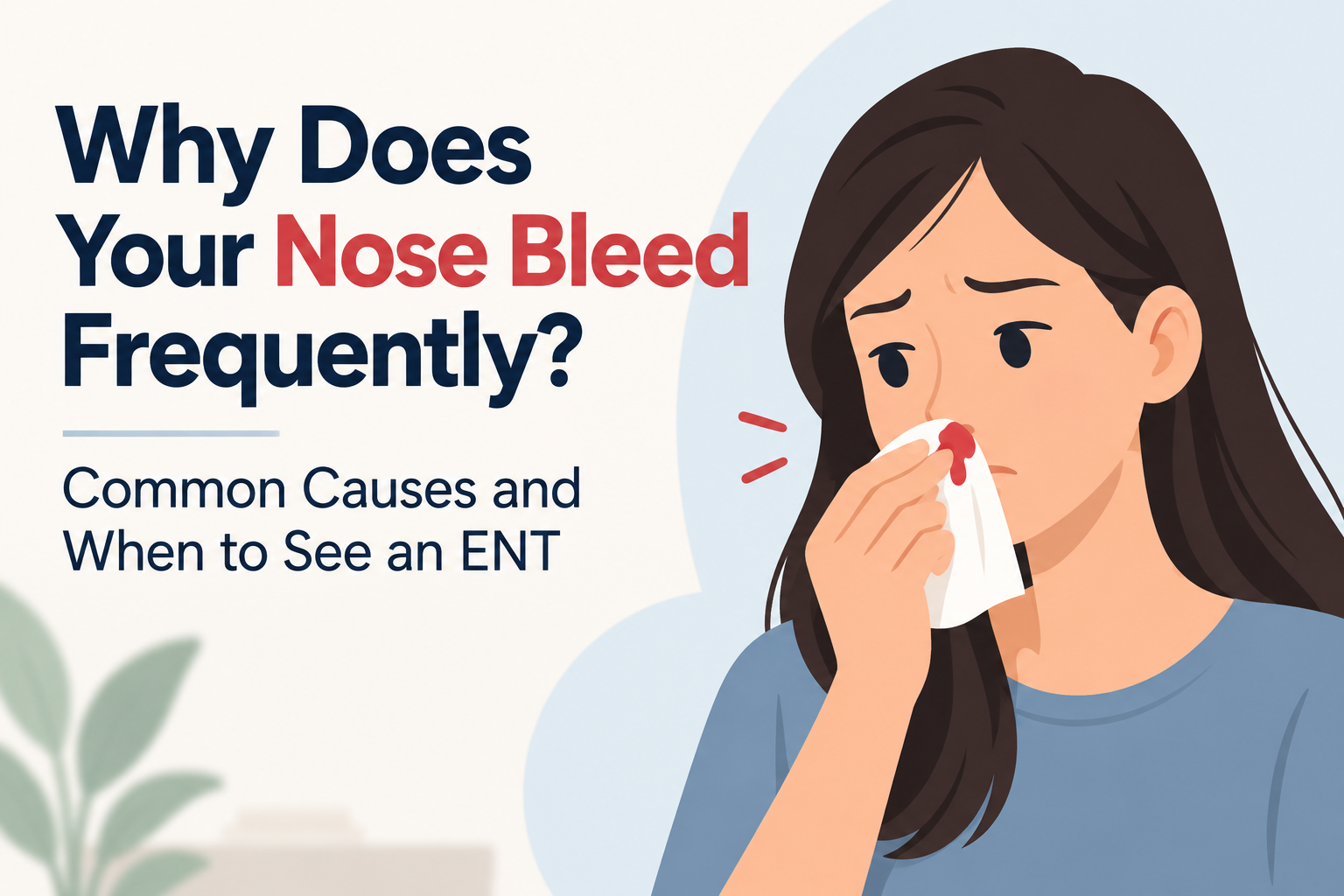
A nosebleed can happen unexpectedly and is usually not a cause for concern. But if you find yourself experiencing frequent or recurrent nosebleeds, it’s worth looking beyond the immediate bleeding and identifying what may be causing them.
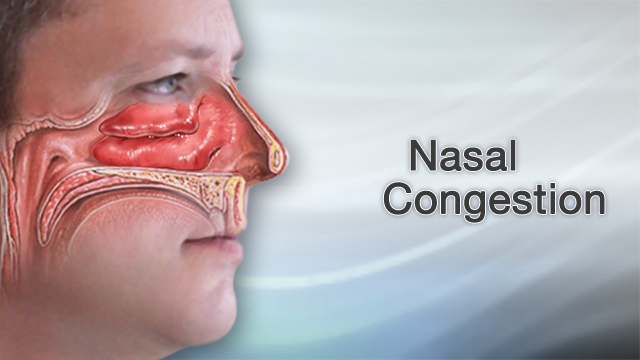
The medical term for a nosebleed is epistaxis. Most nosebleeds originate from small blood vessels near the front of the nasal septum, where the blood vessels are particularly exposed and sensitive.
While dry air, nose picking, allergies, and minor irritation are common triggers, recurrent nosebleeds can sometimes be associated with medications, high blood pressure, nasal problems, or bleeding disorders.
What Causes Frequent Nosebleeds?
There isn’t always one single cause. Several factors can make the delicate blood vessels inside the nose more likely to bleed.
1. Dry Air
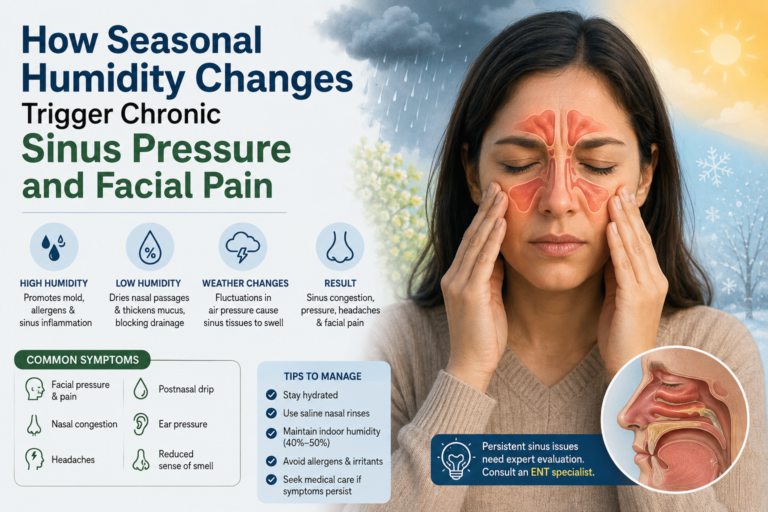
Dry weather can remove moisture from the nasal lining, causing it to become dry and cracked.
This is particularly common during:
- Winter
- Dry climates
- Air-conditioned environments
- Rooms with low humidity
Using a saline nasal spray or keeping indoor humidity at a comfortable level may help prevent excessive dryness.
2. Nose Picking or Frequent Rubbing
The front part of the nasal septum contains many small blood vessels. Repeated touching, scratching, or picking can damage these vessels and trigger bleeding.
Children are particularly prone to nosebleeds from this cause.
3. Allergies and Frequent Sneezing
Allergic rhinitis can make the nasal lining inflamed and sensitive. Repeated sneezing, blowing the nose, or rubbing the nose may further irritate the blood vessels.
Allergy medications can also sometimes contribute indirectly if they cause nasal dryness.
4. Nasal Irritation or Injury
A minor injury to the nose can cause bleeding. Other sources of irritation include:
- Forceful nose blowing
- Frequent use of tissues
- Chemical fumes
- Smoke
- Air pollution
- Nasal trauma
Even a small injury can cause recurrent bleeding while the affected area is healing.
5. Nasal Sprays
Some nasal sprays can cause dryness or irritation, particularly if they are used incorrectly or excessively.
This doesn’t mean you should stop a prescribed nasal spray. Instead, ask your doctor or pharmacist about proper technique and whether dryness may be contributing to your symptoms.
6. Blood-Thinning Medicines
Medicines such as aspirin, clopidogrel, warfarin, and certain newer anticoagulants can make bleeding easier to start or harder to stop.
Do not stop prescribed blood-thinning medication on your own. If you experience repeated nosebleeds, discuss them with your healthcare provider.
7. High Blood Pressure
High blood pressure is sometimes associated with nosebleeds, particularly when bleeding is difficult to control. However, a nosebleed does not automatically mean that your blood pressure is high.
If you have recurrent nosebleeds, checking your blood pressure can be part of a broader medical evaluation.
8. Deviated Septum or Other Nasal Problems
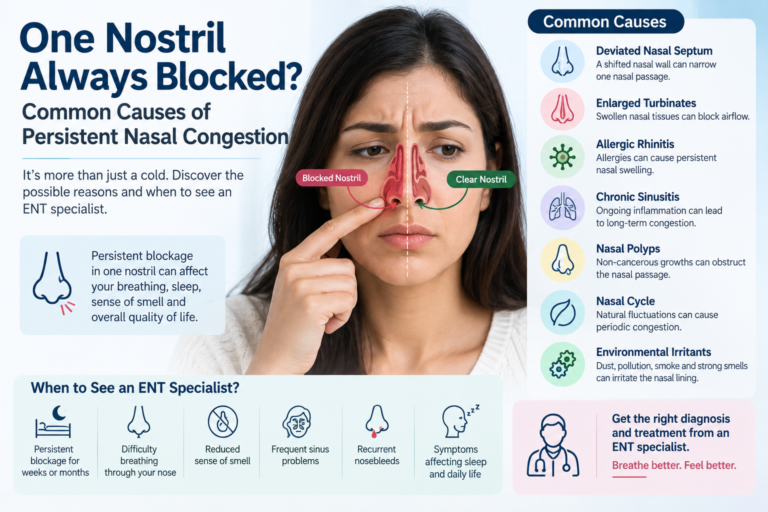
A deviated septum can alter airflow through the nose and contribute to dryness or irritation in some people.
Other structural problems can also make certain areas of the nasal lining more vulnerable to repeated irritation.
9. Bleeding or Clotting Disorders
Less commonly, recurrent nosebleeds can be associated with conditions that affect blood clotting.
This may be more likely if nosebleeds occur together with:
- Easy bruising
- Bleeding gums
- Heavy menstrual bleeding
- Prolonged bleeding after minor injuries
- A family history of bleeding disorders
A doctor may recommend blood tests when the medical history suggests a possible clotting problem.
10. Nasal Growths or Other Rare Causes
Persistent one-sided nosebleeds, particularly when accompanied by nasal blockage, facial swelling, pain, or a visible mass, require an ENT evaluation.
Most nosebleeds are not caused by tumors or cancer, but unusual or persistent symptoms should not be ignored.
Why Does My Nose Bleed From One Side?
Most nosebleeds originate from one side of the nose because the bleeding usually comes from a localized blood vessel.
Occasional bleeding from one nostril isn’t necessarily concerning.
However, recurrent bleeding from the same side, especially when associated with persistent blockage, foul-smelling discharge, facial pain, or a visible lesion, should be examined by an ENT specialist.
How to Stop a Nosebleed at Home
If your nose starts bleeding, stay calm and follow these steps:
- Sit upright and lean slightly forward.
- Breathe through your mouth.
- Pinch the soft part of your nose firmly between your thumb and finger.
- Continue holding pressure for 10–15 minutes without repeatedly checking.
- Spit out blood that reaches your mouth rather than swallowing it.
- After the bleeding stops, avoid forceful nose blowing, heavy exercise, and nose picking for a while.
Leaning forward is important because it helps prevent blood from running down the back of your throat.
What Should You Avoid During a Nosebleed?
Avoid:
- Tilting your head backward
- Lying flat
- Blowing your nose immediately afterward
- Picking or scratching inside the nose
- Checking repeatedly before maintaining pressure for enough time
If bleeding doesn’t stop with proper pressure, medical evaluation may be necessary.
When Should You See an ENT Specialist?
You should consider an ENT evaluation if:
- Nosebleeds happen frequently
- Bleeding repeatedly comes from the same nostril
- Nosebleeds occur without an obvious trigger
- You also have persistent nasal blockage
- You experience recurrent sinus or nasal problems
- You take blood-thinning medication
- You have frequent bruising or other unusual bleeding
- Nosebleeds are affecting your daily life
An ENT specialist can examine the nasal passages and identify the specific bleeding site.
When Is a Nosebleed an Emergency?
Seek urgent medical care if:
- Bleeding is heavy
- Bleeding doesn’t stop after sustained pressure
- You feel faint, weak, or short of breath
- The bleeding follows significant facial or head trauma
- You are vomiting or coughing up large amounts of blood
- You have a known bleeding disorder and the bleeding is difficult to control
Children, older adults, and people taking anticoagulant medication may require particularly prompt assessment when bleeding is significant or persistent.
How Does an ENT Treat Recurrent Nosebleeds?
Treatment depends on the source and severity of the bleeding.
Your ENT specialist may recommend:
Nasal Moisturization
Saline sprays, gels, or other moisturizing measures can help protect dry nasal tissue.
Treating Underlying Nasal Conditions
Allergies, inflammation, infections, or structural problems may need to be addressed to reduce repeated irritation.
Cauterization
If a specific blood vessel is responsible for recurrent bleeding, an ENT specialist may use chemical or electrical cautery to seal the vessel.
Nasal Packing
For bleeding that doesn’t stop with pressure or cautery, nasal packing may sometimes be required.
Further Investigation
Persistent or unusual nosebleeds may require nasal endoscopy, blood tests, imaging, or other investigations depending on the symptoms.
Can Frequent Nosebleeds Be Prevented?
Some simple measures can reduce the likelihood of recurrent bleeding:
- Keep the inside of the nose moisturized.
- Use saline nasal sprays when appropriate.
- Avoid picking or aggressively rubbing the nose.
- Blow your nose gently.
- Manage allergies properly.
- Avoid cigarette smoke and other nasal irritants.
- Use nasal sprays according to medical instructions.
- Maintain appropriate indoor humidity.
If a doctor has identified a specific cause, treating that condition is usually the most effective long-term approach.
Final Thoughts
Most nosebleeds are harmless and can be managed with proper first aid. However, frequent or unexplained nosebleeds shouldn’t simply be ignored.
Dryness, allergies, irritation, medications, and minor trauma are common causes, while structural nasal problems and bleeding disorders are less common possibilities.
If your nosebleeds keep returning, especially from the same nostril or alongside persistent nasal blockage, an ENT specialist can examine the nose, identify the bleeding source, and recommend appropriate treatment.
If a nosebleed is heavy or does not stop despite sustained pressure, seek urgent medical care.