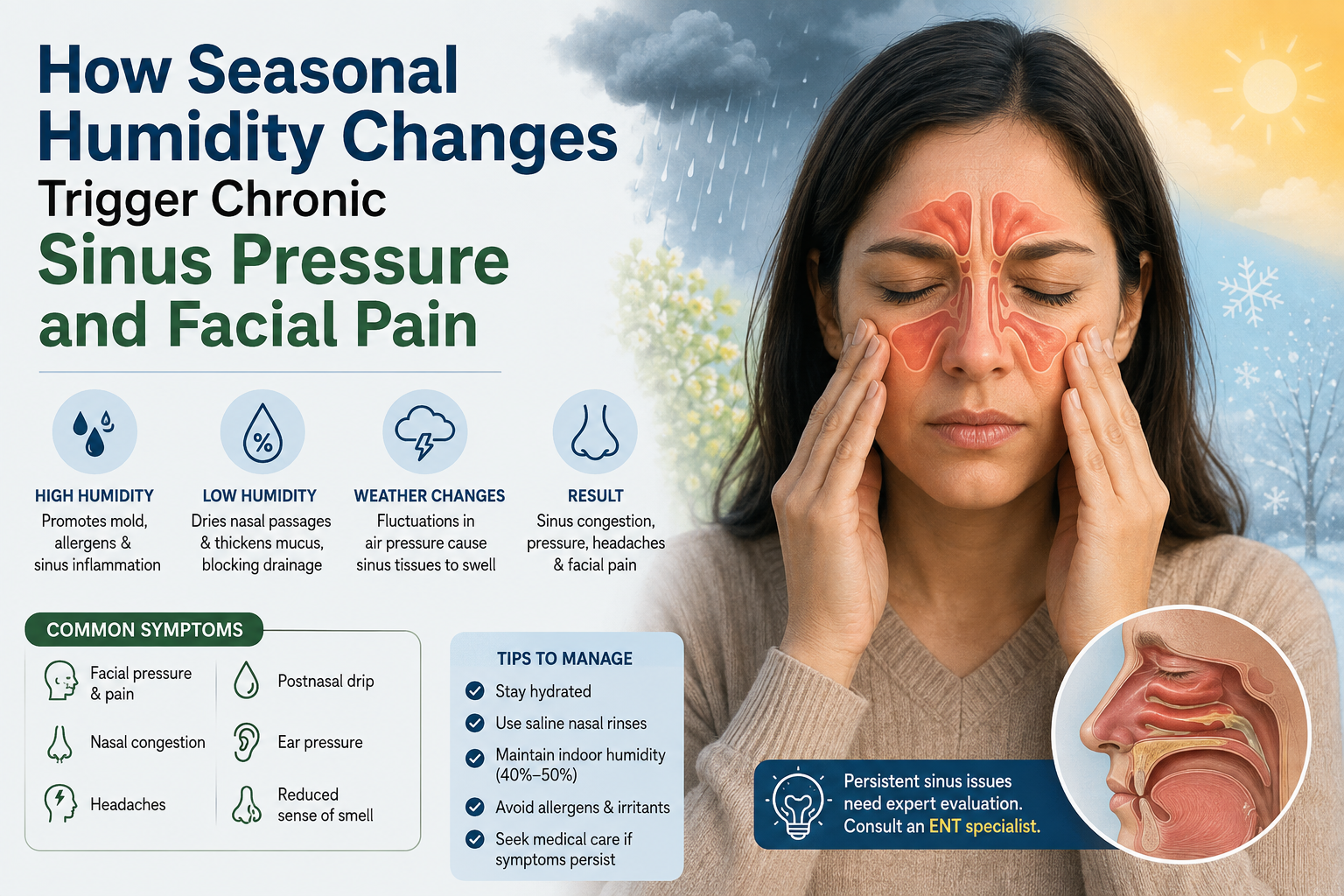
Seasonal weather changes do more than affect your wardrobe—they can also have a significant impact on your sinus health. If you notice increased sinus pressure, headaches, or facial pain during the monsoon, winter, or sudden weather transitions, changing humidity levels may be the hidden cause.
While occasional sinus discomfort is common, recurring symptoms with every season could indicate chronic sinus inflammation that’s being triggered or worsened by fluctuations in humidity. Understanding this connection can help you manage symptoms more effectively and know when it’s time to seek medical care.
How Humidity Affects Your Sinuses
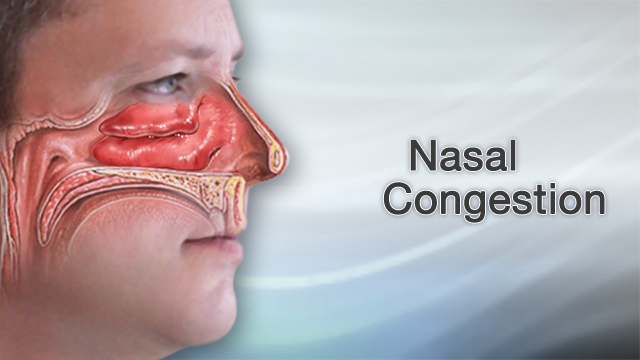
Your sinuses are air-filled cavities lined with a thin layer of mucus that traps dust, allergens, and germs. Tiny hair-like structures called cilia move this mucus out of the sinuses, helping keep your airways clean.
Humidity plays an essential role in maintaining this natural cleaning process.
- Low humidity dries out the nasal passages, making mucus thicker and harder to drain.
- High humidity encourages the growth of mold, dust mites, and other allergens that can inflame the sinus lining.
- Rapid weather changes can alter air pressure, causing already inflamed sinus tissues to swell.
These factors can block normal sinus drainage, leading to pressure, congestion, and pain.
Common Symptoms Triggered by Seasonal Humidity
Humidity-related sinus issues often include:
- Facial pressure around the cheeks, forehead, or eyes
- Persistent nasal congestion
- Thick nasal mucus
- Headaches that worsen with weather changes
- Pain when bending forward
- Ear pressure or fullness
- Postnasal drip
- Reduced sense of smell
- Fatigue due to poor sleep and congestion
Some people experience symptoms every year during the same season, making the pattern easier to recognize.
Why Facial Pain Develops
When the sinus openings become swollen, mucus gets trapped inside the sinus cavities. This buildup increases pressure against surrounding tissues and nerves, causing pain in areas such as:
- Between the eyes
- Across the forehead
- Around the cheeks
- Behind the eyes
- Upper teeth and jaw
The discomfort may worsen during rainy weather, cold mornings, or sudden shifts in atmospheric pressure.
Seasonal Triggers to Watch For
Different seasons bring different challenges for your sinuses.
Monsoon
- Increased humidity
- Mold growth
- Damp indoor environments
- Higher exposure to fungal spores
Winter
- Dry indoor heating
- Cold, dry outdoor air
- Thickened mucus
- Increased viral infections
Spring
- Tree and grass pollen
- Rising temperatures
- Allergic inflammation
Autumn
- Weed pollen
- Dust accumulation
- Temperature fluctuations
Recognizing which season affects you most can help you prepare before symptoms begin.
Who Is at Higher Risk?
You may be more likely to experience humidity-related sinus problems if you have:
- Allergic rhinitis (hay fever)
- Chronic sinusitis
- Nasal polyps
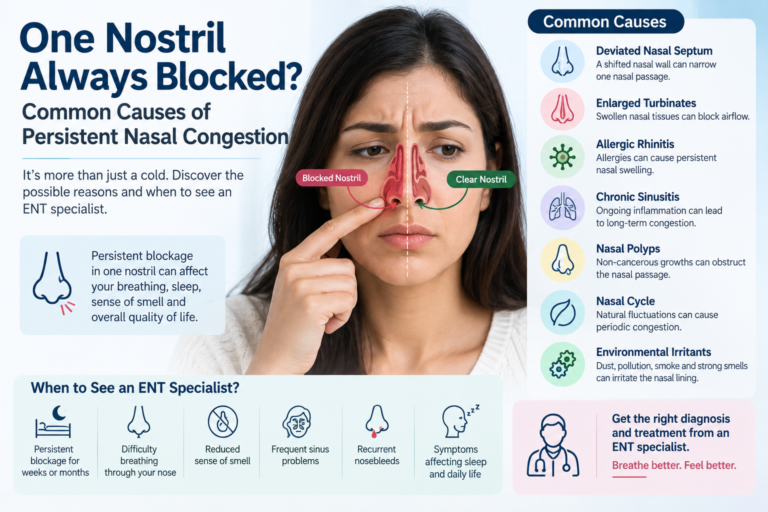
- A deviated nasal septum
- Asthma
- Frequent respiratory infections
- Exposure to smoke or air pollution
These conditions make the nasal passages more sensitive to environmental changes.
How to Reduce Seasonal Sinus Pressure
Several simple measures can help minimize seasonal flare-ups.
Stay Hydrated
Drinking plenty of water helps keep mucus thin and easier to drain.
Use Saline Nasal Irrigation
A saline rinse removes allergens, irritants, and excess mucus while keeping the nasal passages moist.
Control Indoor Humidity
Aim to maintain indoor humidity between 40% and 50%. A humidifier can help during dry weather, while a dehumidifier may be useful during humid months.
Reduce Allergy Exposure
- Keep windows closed during high-pollen days.
- Clean air filters regularly.
- Remove mold from damp areas.
- Wash bedding frequently to reduce dust mites.
Avoid Irritants
Limit exposure to cigarette smoke, strong perfumes, chemical fumes, and air pollution, which can worsen sinus inflammation.
Treatment Options
Depending on the cause of your symptoms, your doctor may recommend:
- Saline nasal sprays or rinses
- Antihistamines for allergies
- Nasal corticosteroid sprays
- Decongestants (short-term use only)
- Antibiotics if a bacterial infection is confirmed
- Allergy management or immunotherapy for long-term control
Persistent or recurring symptoms should always be evaluated before starting repeated medications.
When Should You See an ENT Specialist?
Seek medical attention if you experience:
- Sinus symptoms lasting more than 10–14 days
- Frequent sinus infections throughout the year
- Severe facial pain or swelling
- High fever
- Thick green or bloody nasal discharge
- Vision changes
- Persistent headaches that do not improve with treatment
An ENT specialist can identify structural issues, chronic inflammation, or other underlying causes that may require targeted treatment.
Final Thoughts
Seasonal humidity changes can significantly affect sinus health, leading to chronic sinus pressure, facial pain, congestion, and headaches. Whether it’s dry winter air, humid monsoon weather, or seasonal allergens, these environmental changes can trigger inflammation and interfere with normal sinus drainage.
If your sinus symptoms return with every season or fail to improve with home remedies, consulting an ENT specialist can help identify the underlying cause and provide long-term relief.